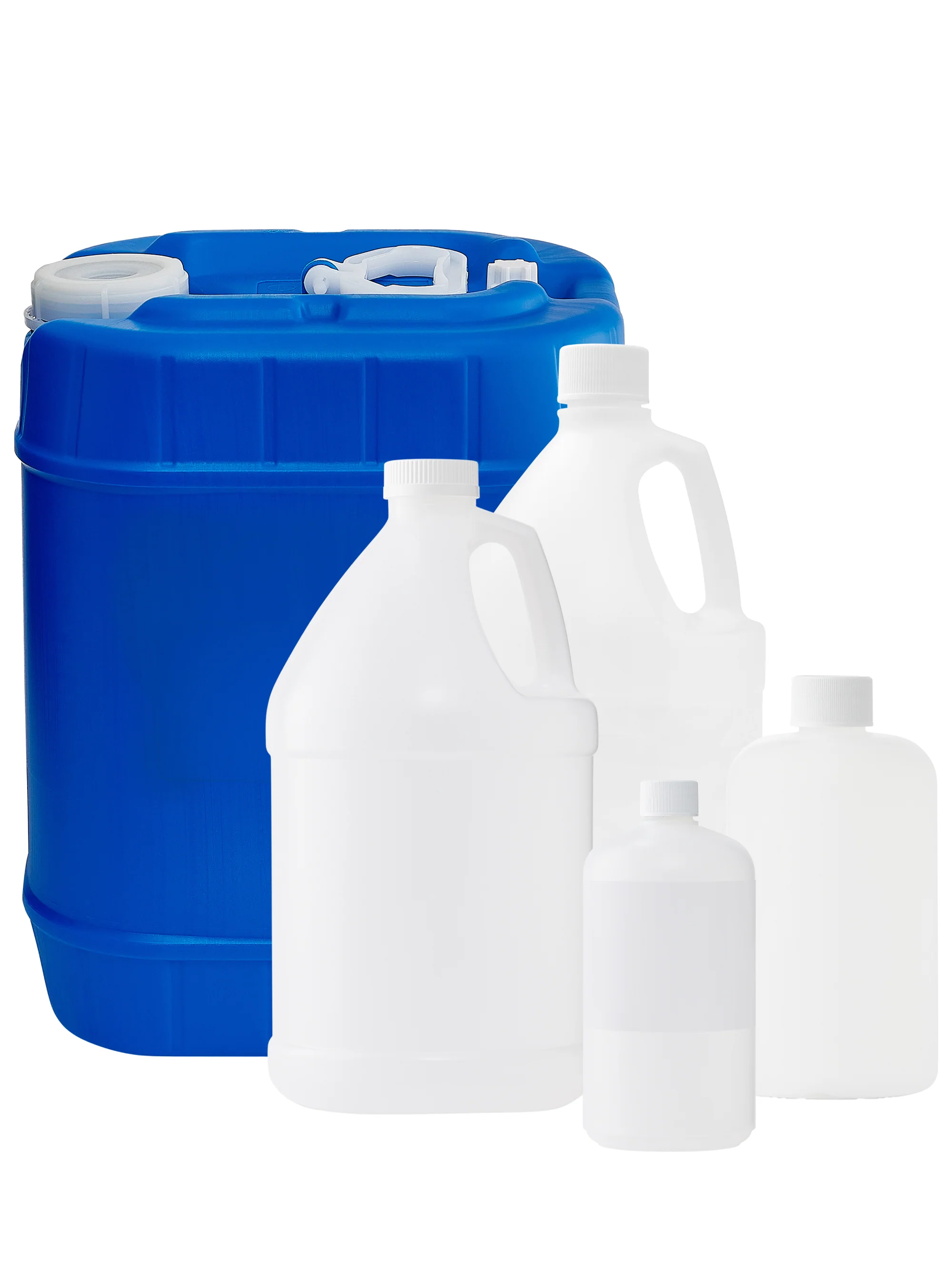
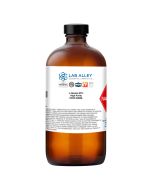
Pyridine was primarily produced from coal tar before the development of its synthesis process based on acetaldehyde and ammonia. It is a six-membered aromatic heterocyclic chemical compound having five carbon atoms and one nitrogen atom in its ring structure. It is the primary member of the pyridine family, with a chemical formula of C 5 H 5 N. It has a fish-like odor and is extremely flammable, slightly alkaline, and water miscible. Lab Grade chemicals are also known as Chemically Pure or Laboratory Reagents. Despite its acceptable purity, Lab Grade chemicals do not comply with any recognized quality or purity criteria, such as the ACS Grade, the USP Grade, or the FCC Grade. Our Pyridine, Lab Grade is ideal for educational institutes and research labs due to its high purity.
Competitive pricing and well-stocked US-based inventory.
Fast 1-2 business days shipping, including hazmat transport.
Exceptional customer service and chemical technical support.
Delivery on budget, on time, every time.
Product Information
More Information
CAS
110-86-1
Grade
Lab Grade
pH
Between 7 to 14
Density
982 kg/m³
Molecular formula
C5H5N
Molecular weight
79.1
Autoship Available
No
Reviews
Safety and Shipping
Pyridine is added to ethanol to make it unsuitable for drinking. In low doses, pyridine is added to foods to give them a bitter flavor, and such usage was approved by the US Food and Drug Administration and is still considered safe by the agency even though external lobbying forced it to ban pyridine's use as a synthetic flavor in 2018. The detection threshold for pyridine in solutions is about 1–3 mmol·L−1 (79–237 mg·L−1).
Pyridine has a flash point of 17 °C and is, therefore, highly flammable. Its ignition temperature is 550 °C, and mixtures of 1.7–10.6 vol% of pyridine with air are explosive. The thermal modification of pyridine starts above 490 °C, resulting in bipyridine (mainly 2,2′-bipyridine and to a lesser extent 2,3′-bipyridine and 2,4′-bipyridine), nitrogen oxides, and carbon monoxide. Pyridine easily dissolves in water and harms both animals and plants in aquatic systems. The permitted maximum allowable concentration of pyridine was 15–30 parts per million (ppm, or 15–30 mg·m−3 in air) in most countries in the 1990s, but was reduced to 5 ppm in the 2000s. For comparison, indoor air contaminated with tobacco smoke may contain up to 16 µg·m−3 of pyridine, and one cigarette contains 21–32 µg.
Business Support
Built for Business.
At Lab Alley, we simplify procurement with custom quotes, credit
applications, tax exemptions, and fulfillment support, ensuring on-budget, on-time delivery - your
success is our priority. Create or sign into your business account now!
Apply for Credit
A Lab Alley credit account streamlines
purchasing for your business. Our Customer Success Team is available to help you
through every step of the process.
This chemical will only be shipped to addresses that are:
Businesses
Schools and Universities
Laboratories
If you use a residential address during checkout, we will automatically remove this item from your order prior to shipping.
If your order includes more than 1 lb of mercury, it must be shipped to a commercial address, lab, or school.
Please note that we’re unable to ship mercury—of any amount—to apartments or shipping/parcel stores.
Ineligible orders will be automatically canceled.
If you are purchasing SDA in 5 gallons or more, you are required to provide a TTB permit showing how much of the product you are allowed to purchase per year. Please email your TTB permit to customercare@laballey and include your Order Number.