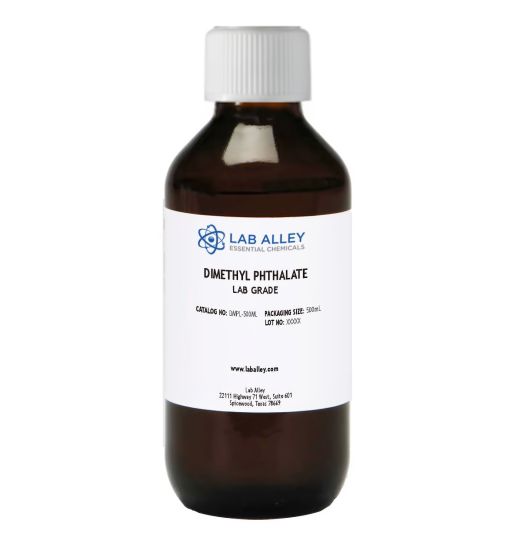
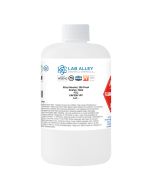
Dimethyl phthalate, often abbreviated as DMP, is a chemical compound with the molecular formula C10H10O4. It is an organic ester that is derived from phthalic acid and methanol. The "Lab Grade" designation suggests that the Lab Alley Dimethyl Phthalate is a high-purity grade intended for use in laboratory or research settings.
Cosmetics and Fragrances: In cosmetics and fragrances, DMP can be used as a fixative to help stabilize scents and perfumes.
Pharmaceuticals: In some pharmaceutical formulations, dimethyl phthalate may be used as an excipient or an ingredient in drug delivery systems.
Solvent: DMP can be used as a solvent in chemical processes and in the formulation of various products, such as adhesives, coatings, and perfumes. It can dissolve a wide range of organic compounds.
Laboratory Research: In laboratory settings, dimethyl phthalate (usually in high-purity grades like the 99% lab grade you mentioned) may be used as a reagent in chemical reactions or as a reference material for analytical techniques, such as gas chromatography or mass spectrometry. It can serve as a source of carbon and oxygen in organic synthesis.
Plasticizer: Dimethyl phthalate is commonly used as a plasticizer in the production of plastics and resins. It helps increase the flexibility and durability of plastics, making them more suitable for various applications, including the manufacturing of PVC products, coatings, and films.
Repellent: DMP has been used as a component in insect repellents and as a plasticizer in materials like flypaper.
Chemical Intermediate: It can be used in the synthesis of various organic compounds, including phthalate esters and phthalimide derivatives.
Textile Industry: In the textile industry, dimethyl phthalate can be used as a finisher for fabrics to impart water and wrinkle resistance.
Acute (short-term) exposure to dimethyl phthalate, via inhalation in humans and animals, results in irritation of the eyes, nose, and throat. Animal studies have reported slight effects on growth and on the kidney from chronic oral exposure to the chemical. Read more here. Diethyl phthalate is not known to cause cancer in humans or animals.
The major hazards encountered in the use and handling of dimethylphthalate stem from its toxicologic properties. Toxic by all routes (ie, inhalation, ingestion, dermal contact), exposure to this colorless, oily liquid (or pale-yellow crystals at temperatures below 42 °F) may occur from its use as a plasticizer or solvent. Effects from exposure may include contact burns to the skin and eyes, confusion, ataxia, clonic jerking, coma, seizures, and possibly death. Read more here.
Business Support
Built for Business.
At Lab Alley, we simplify procurement with custom quotes, credit
applications, tax exemptions, and fulfillment support, ensuring on-budget, on-time delivery - your
success is our priority. Create or sign into your business account now!
Apply for Credit
A Lab Alley credit account streamlines
purchasing for your business. Our Customer Success Team is available to help you
through every step of the process.
This chemical will only be shipped to addresses that are:
Businesses
Schools and Universities
Laboratories
If you use a residential address during checkout, we will automatically remove this item from your order prior to shipping.
If your order includes more than 1 lb of mercury, it must be shipped to a commercial address, lab, or school.
Please note that we’re unable to ship mercury—of any amount—to apartments or shipping/parcel stores.
Ineligible orders will be automatically canceled.
If you are purchasing SDA in 5 gallons or more, you are required to provide a TTB permit showing how much of the product you are allowed to purchase per year. Please email your TTB permit to customercare@laballey and include your Order Number.